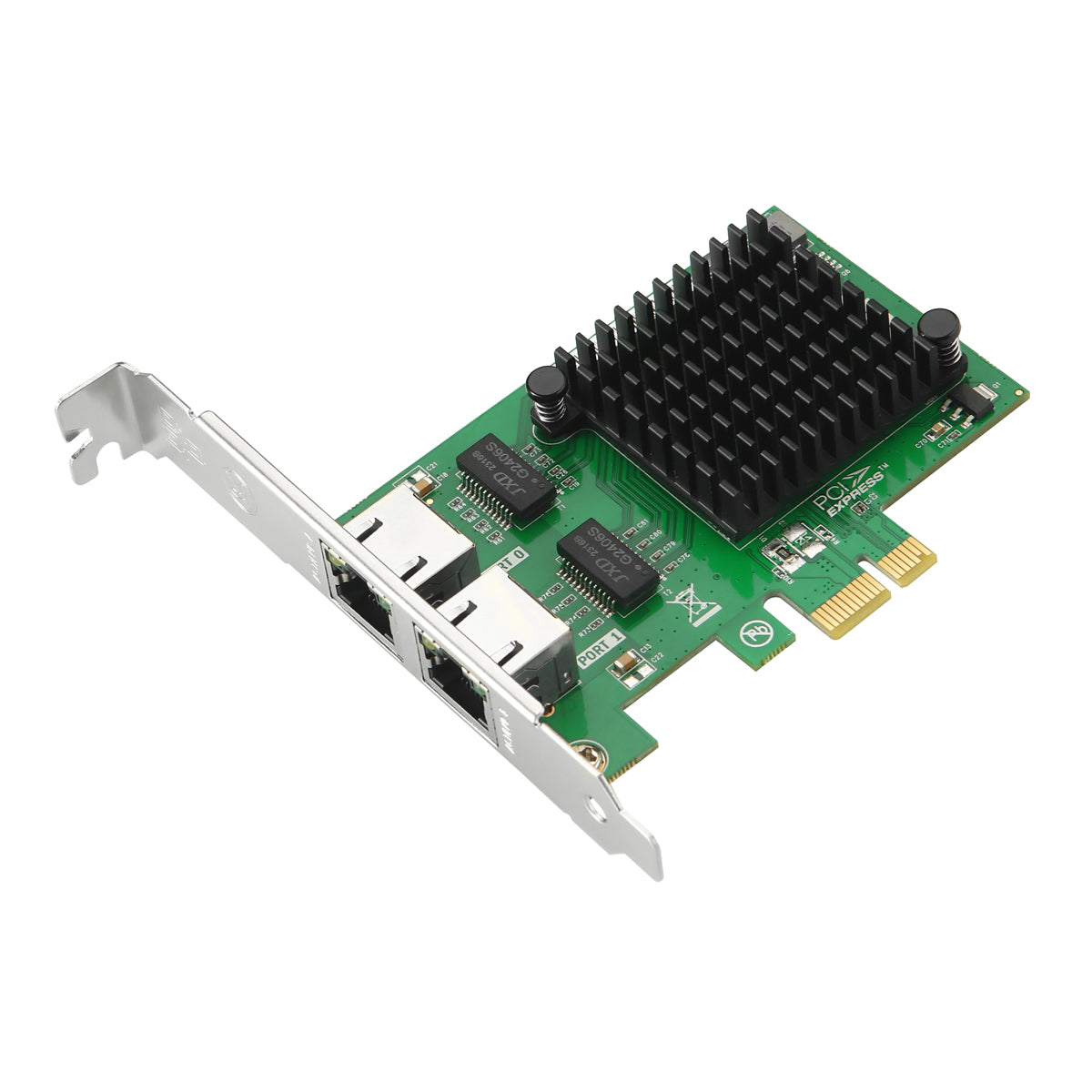
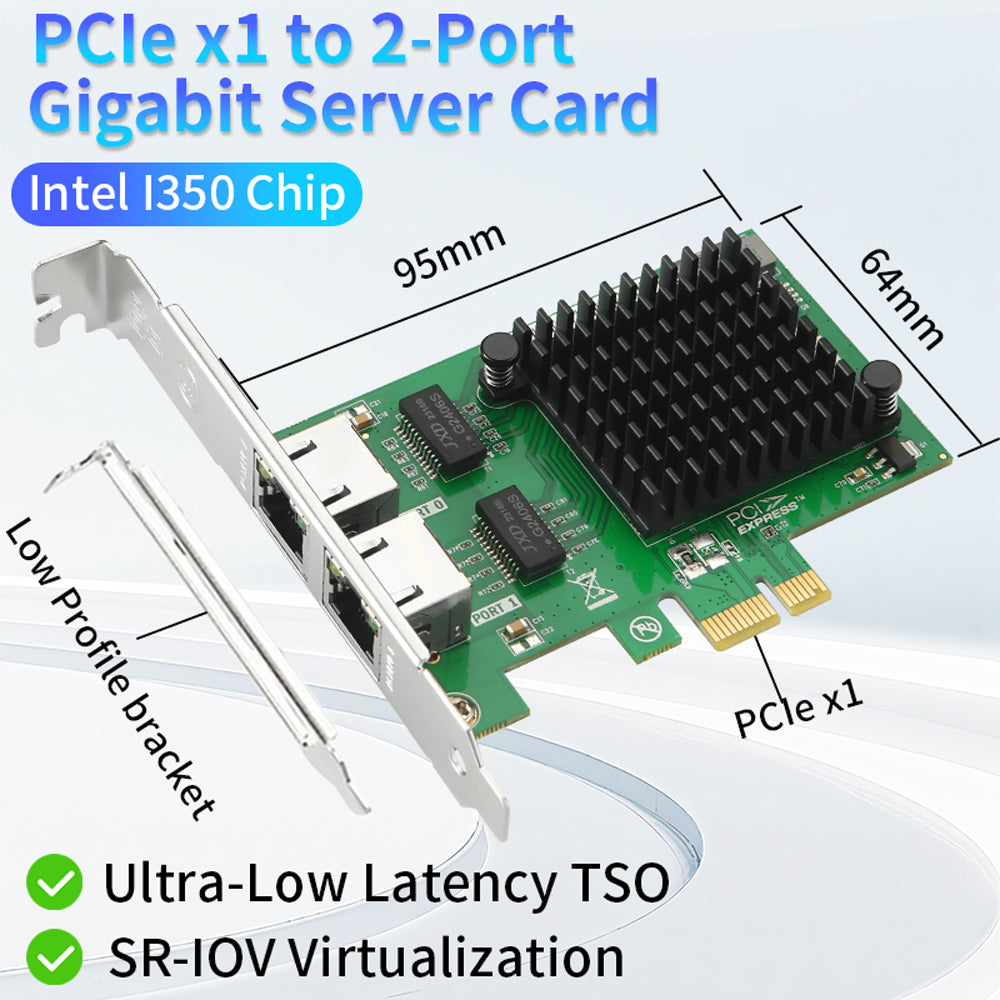
Lekuo PCIe x1 2-Port Gigabit Server Network Card with Intel I350 Chipset
Professional-grade dual-port network adapter delivering reliable gigabit connectivity for enterprise servers and virtualization platforms
Driver & Resources Download
Supported Systems:
Windows XP/7/8/10/Vista | Windows Server 2003/2008/2012
Linux 2.4.x and above
Key Features
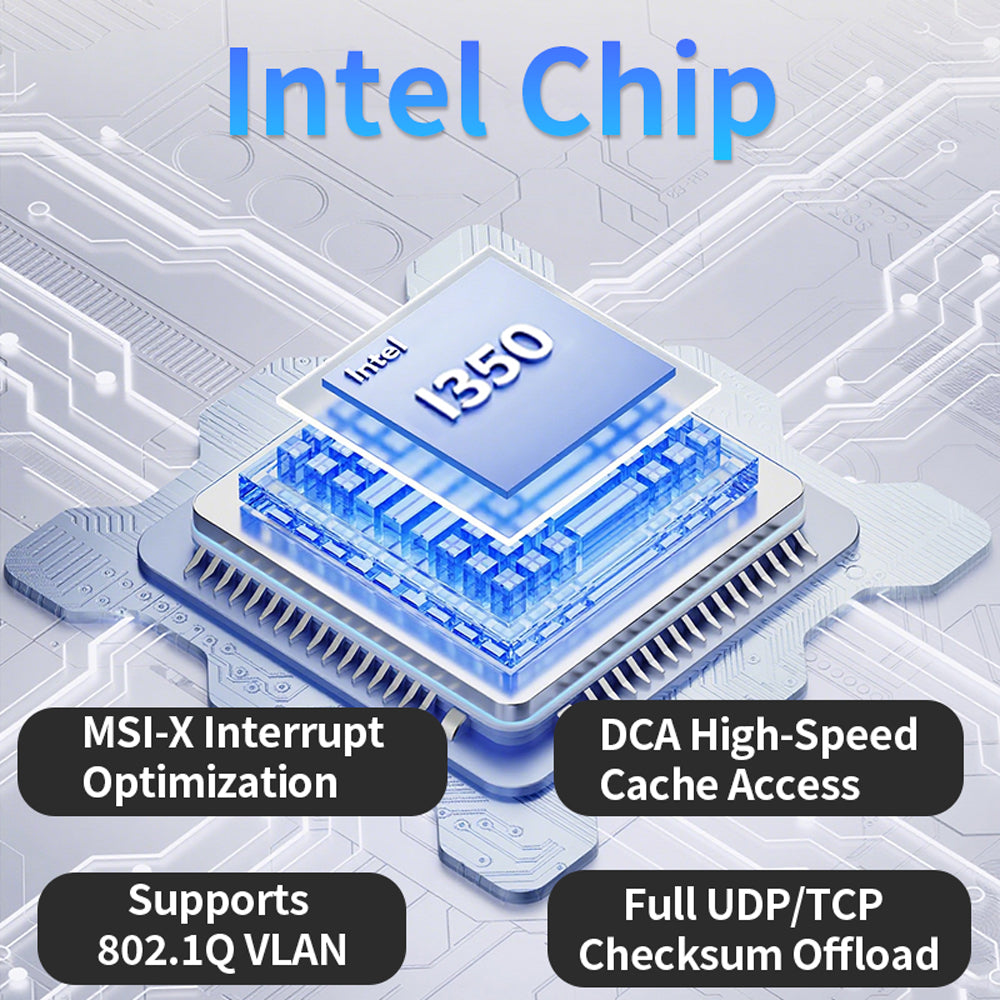
- ✓Intel I350-T2 Chipset - Integrated MAC+PHY+SERDES controller with high performance, reliability, and low power consumption
- ✓Dual Gigabit Ports - Two independent RJ45 ports with auto-negotiation supporting 10/100/1000 Mbps speeds
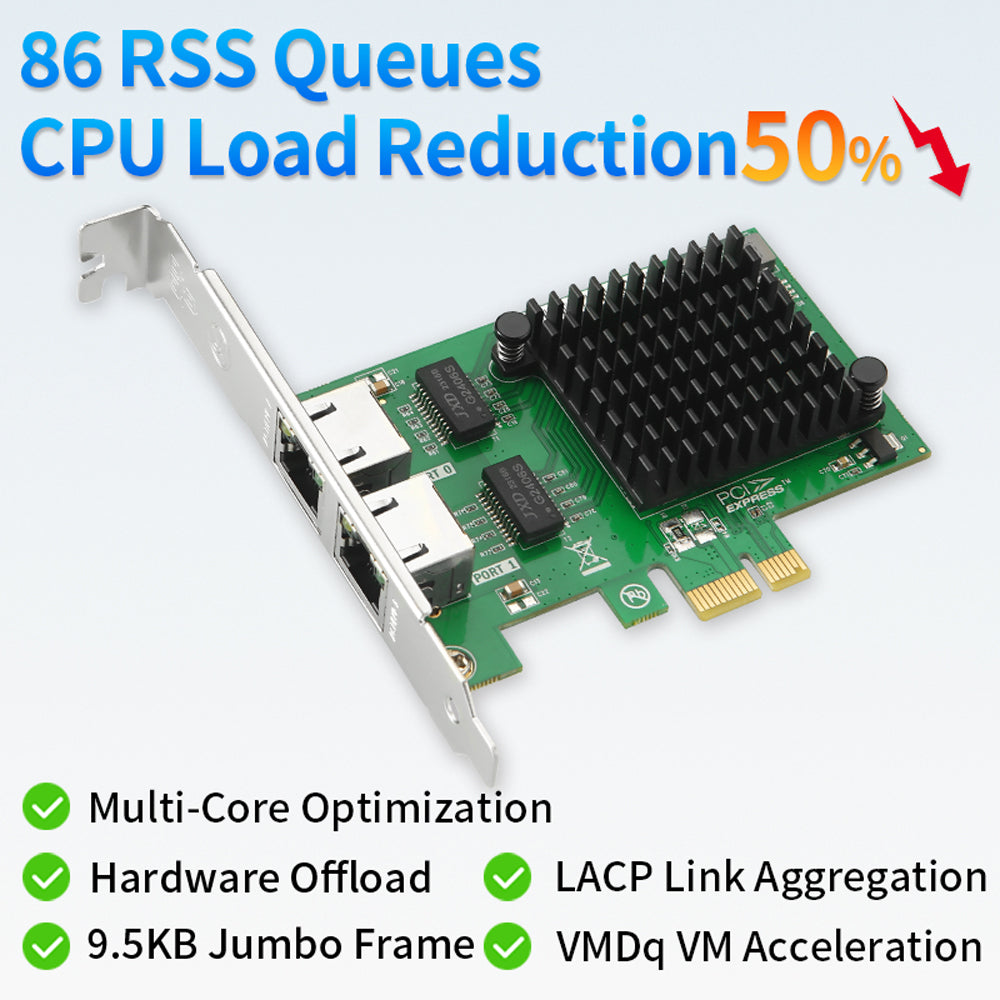
- ✓Advanced Virtualization - Full SR-IOV and VMDq support with 8-pool virtual machine device queues per port
- ✓Hardware Offload - TCP/UDP/IP checksum offload, TSO segmentation, and SCTP checksum offload reduce CPU usage
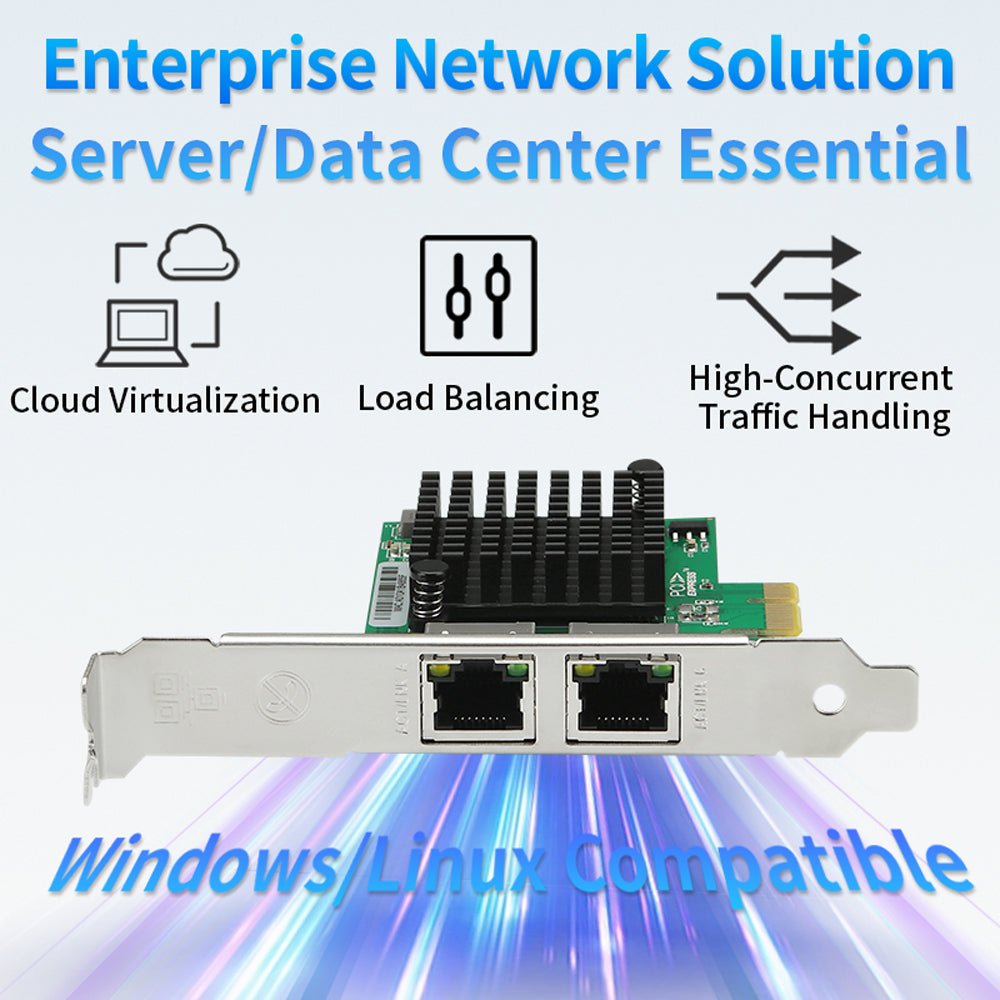
- ✓Enterprise Reliability - Link aggregation (802.3ad LACP), load balancing, and failover protection for mission-critical applications
Product Parameters

Application Scenarios
Servers & Workstations
Perfect for enterprise servers requiring reliable network connectivity, link aggregation (802.3ad LACP), and network redundancy with automatic failover protection.
Virtualization Platforms
Optimized for VMware ESXi, Proxmox VE, and Hyper-V with full SR-IOV and VMDq support featuring 8-pool virtual machine device queues for efficient VM networking.
Desktop Computers
Ideal for desktop PCs requiring additional network ports, network isolation, or enhanced network performance for demanding applications and multi-network environments.


Package Includes
- ▪1 x PCIe x1 to 2-Port 1G Server LAN Card
- ▪1 x Low-Profile Bracket
Note: Contents may vary depending on country/market
FAQs
Q1: Do I need to install drivers for this network card?
Yes, driver installation is required for optimal performance. While some modern operating systems may have basic drivers built-in, we strongly recommend downloading and installing the latest Intel I350 drivers from our download section above or from the Intel website to ensure full functionality and access to all advanced features like SR-IOV, VMDq, and hardware offloading.
Q2: What PCIe slot do I need for this card?
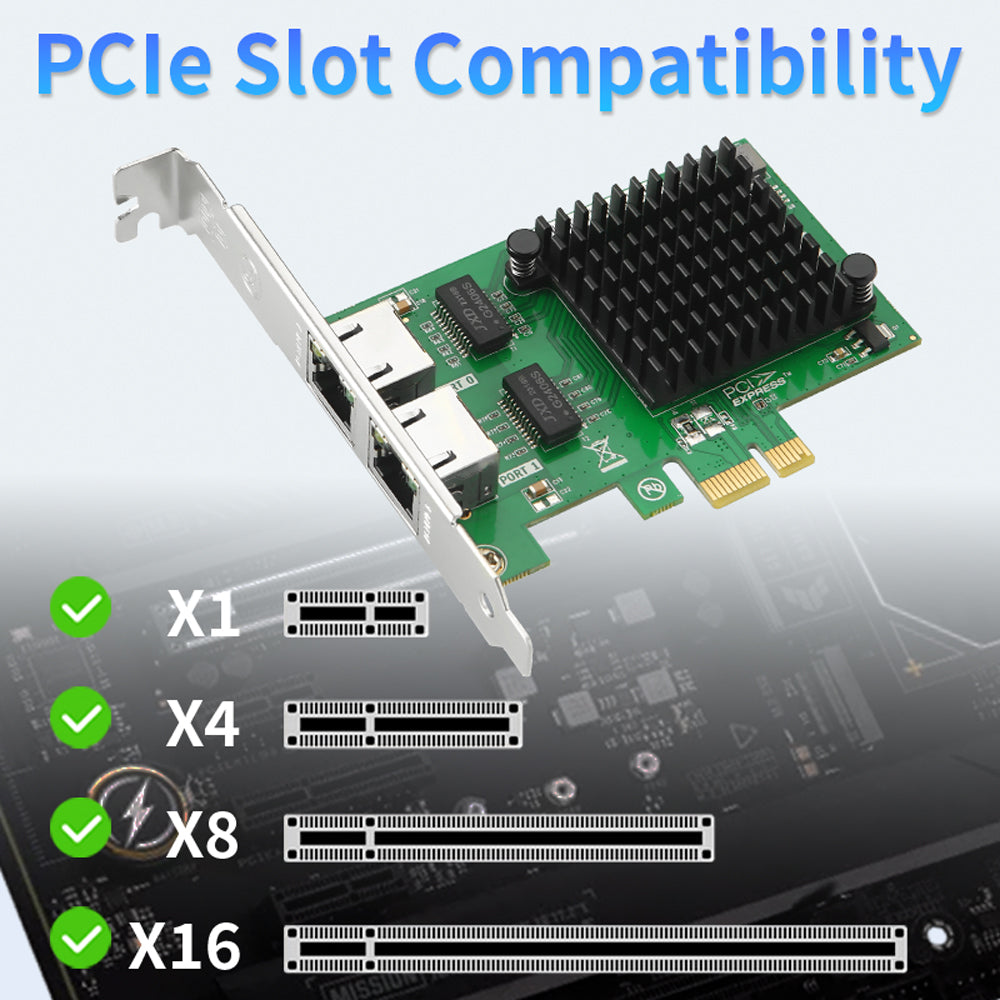
This card uses a PCIe x1 interface and is compatible with x1, x4, x8, and x16 slots. It supports PCI Express 2.1 specification with 5GT/s transfer rate. Simply insert it into any available PCIe slot on your motherboard.
Q3: Does this card support virtualization?
Absolutely. The Intel I350-T2 chipset provides full SR-IOV (Single Root I/O Virtualization) and VMDq (Virtual Machine Device Queues) support with 8-pool queues per port, making it ideal for VMware ESXi, Proxmox VE, Hyper-V, and other hypervisor platforms.
Q4: Can I use link aggregation (bonding) with this card?
Yes, this card supports 802.3ad (LACP) link aggregation and common trunking (GEC/FEC), allowing you to combine both ports for increased bandwidth or configure them for failover redundancy and load balancing. The card works independently with both switches and NICs.
Q5: What hardware acceleration features does this card offer?
The Intel I350-T2 chipset provides comprehensive hardware offloading including TCP/UDP/IP checksum offload, TCP/UDP segmentation offload (TSO), SCTP checksum offload, Direct Cache Access (DCA), and Intel I/O AT 3.0 acceleration technology. These features significantly reduce CPU load and improve network performance.
Q6: How does this card reduce latency?
The card employs TSO interleaved technique, MSI/MSI-X interrupt minimization, and packet coalescing with interrupt and absolute timer to reduce latency. Combined with super-depth packet buffers per channel, these technologies minimize CPU usage and ensure low-latency network performance.
Q7: How much power does this card consume?
This card has a very low power consumption of only 5W, making it extremely energy-efficient for 24/7 server operation. The Intel I350-T2 chipset is designed with low power consumption characteristics while maintaining high performance and reliability.
Q8: What is the multi-queue support on this card?
The card features 8 send/receive queues per port and up to 86 RSS (Receive Side Scaling) queues for multi-processor system optimization. This allows the network load to be distributed across multiple CPU cores, significantly improving performance on multi-core systems and reducing CPU bottlenecks.