
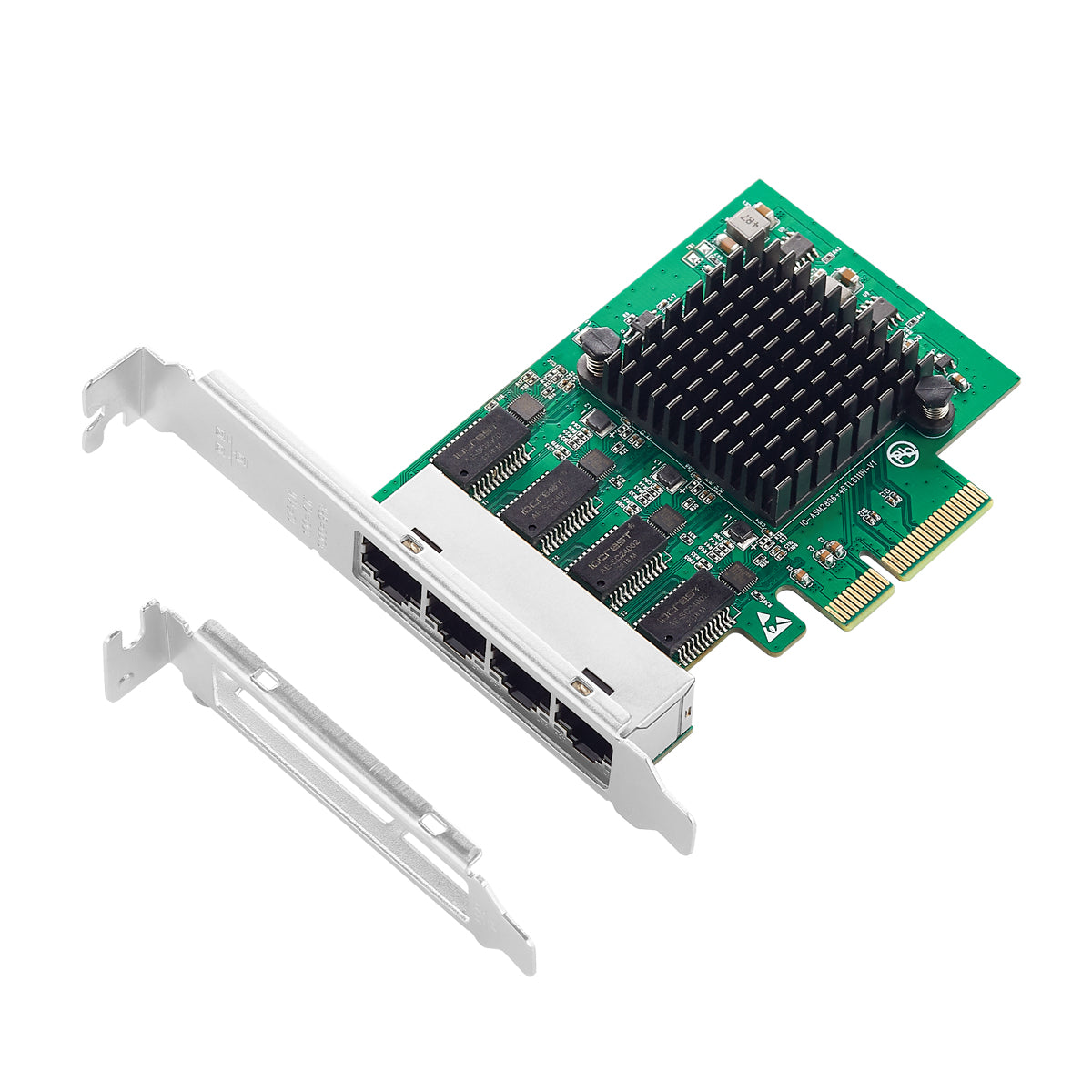
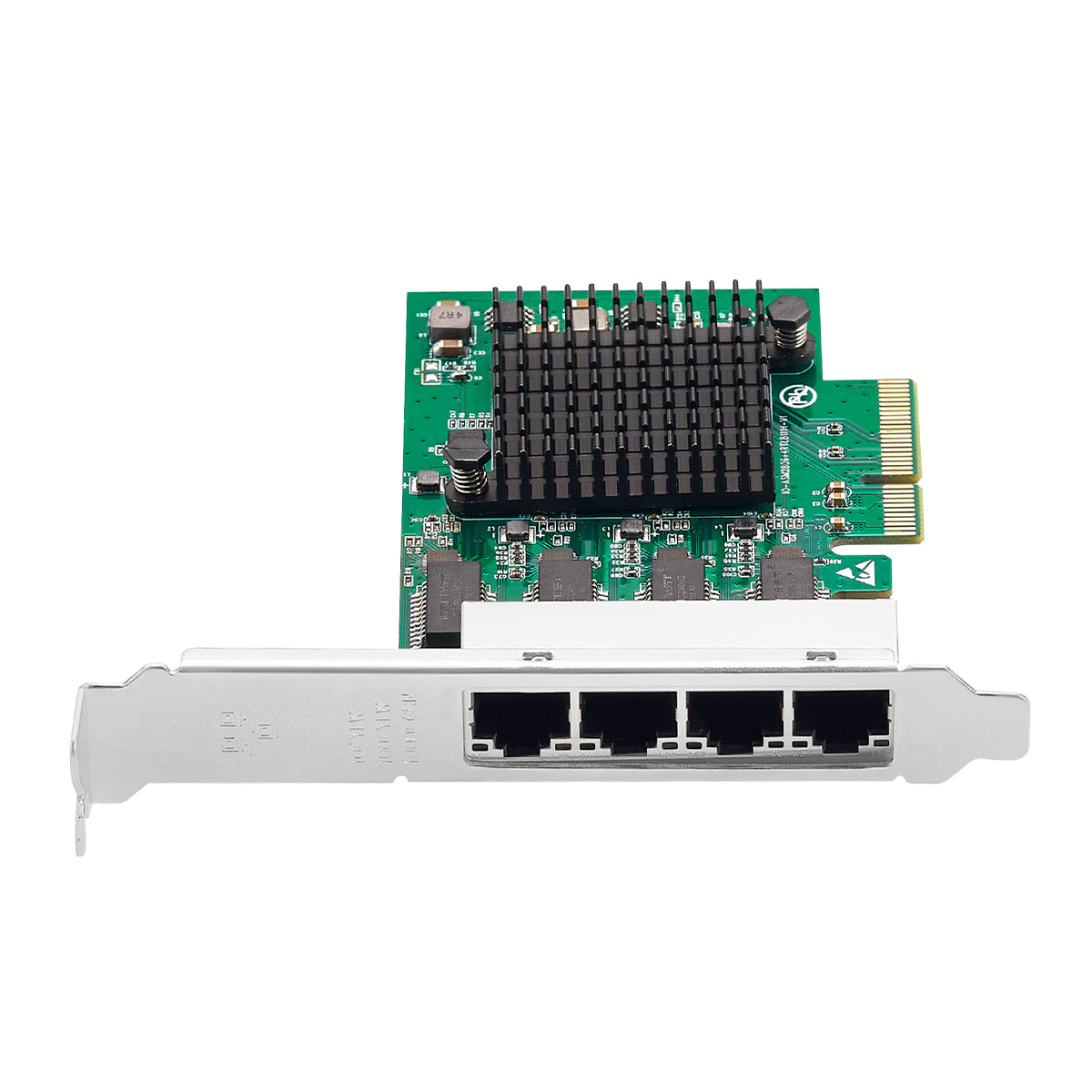
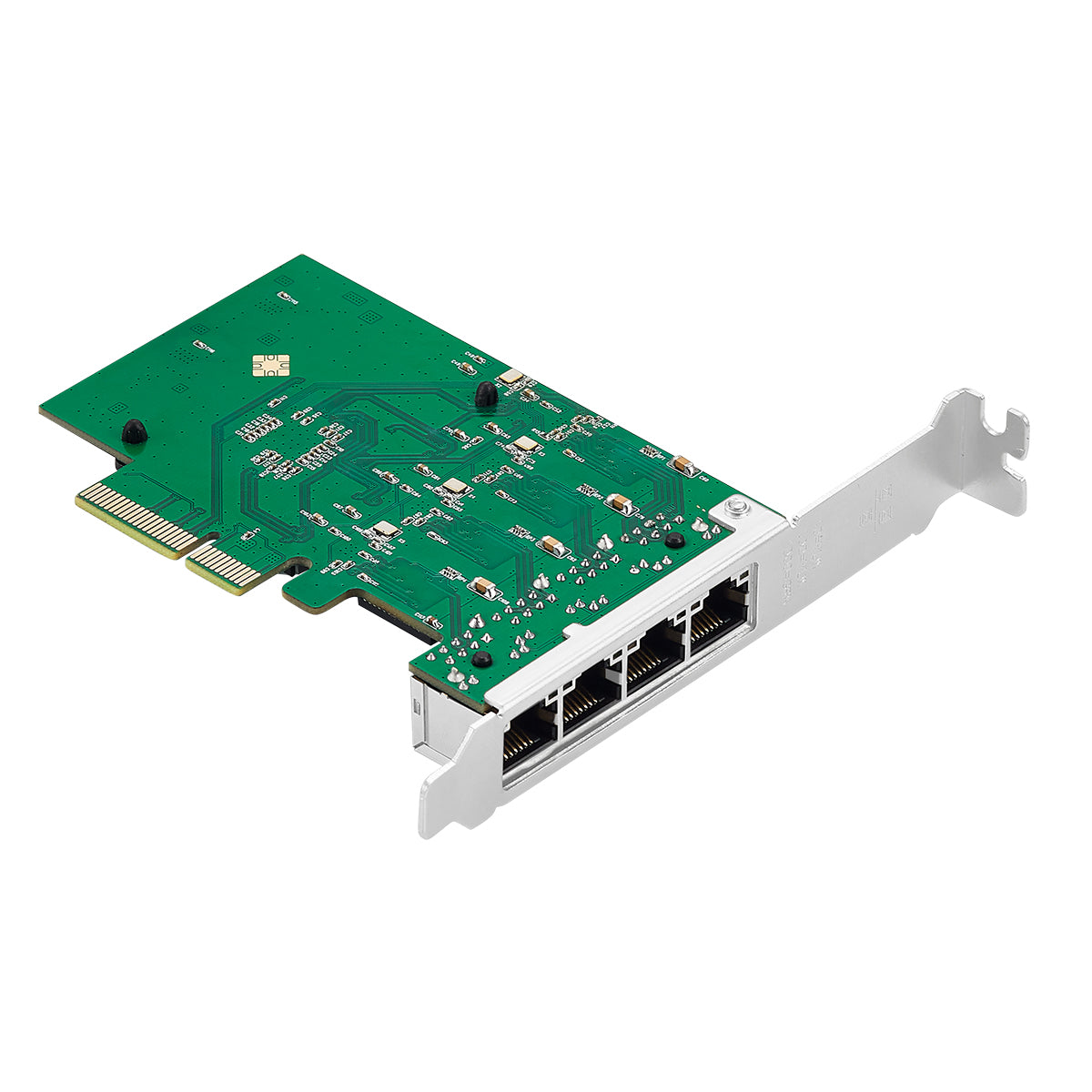
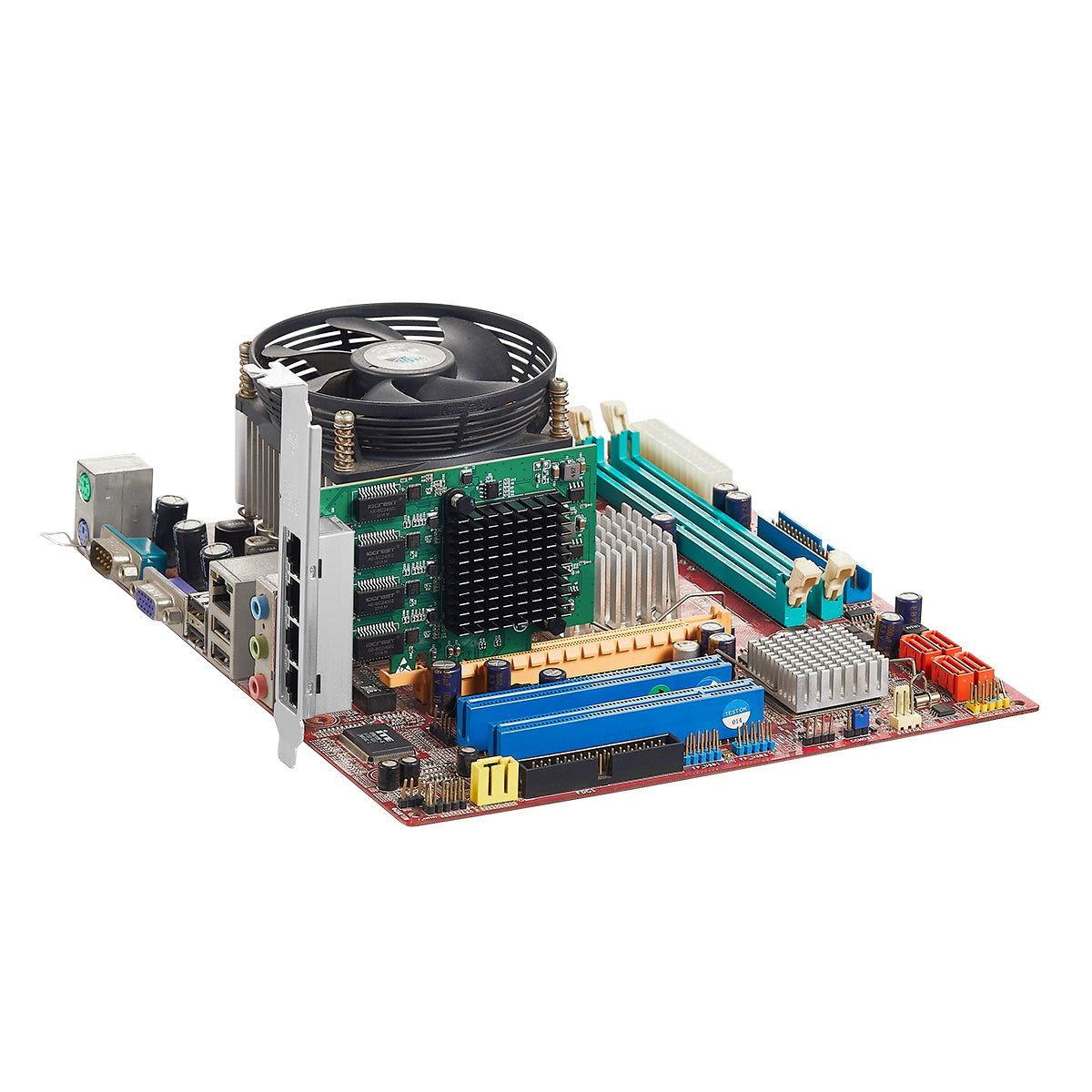
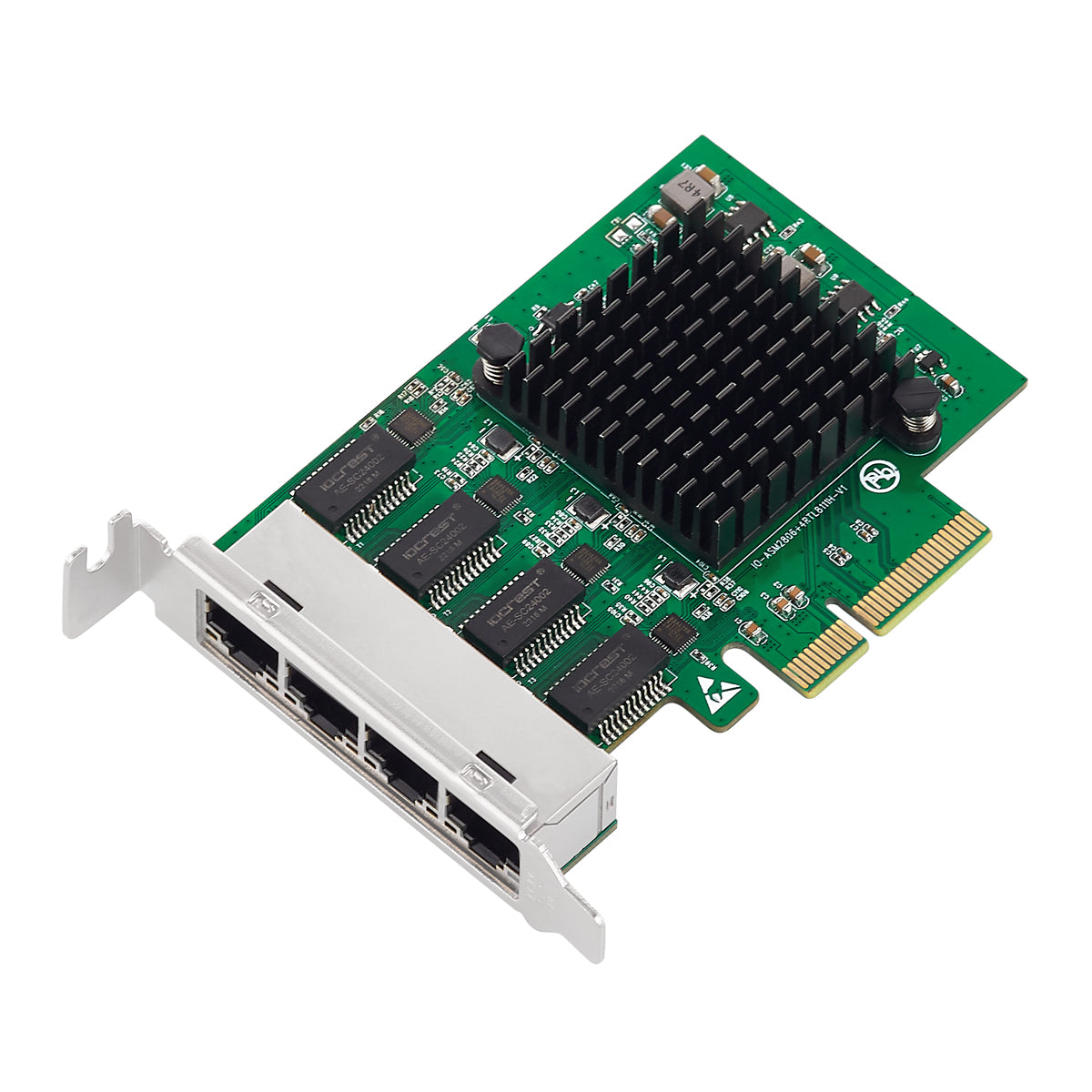
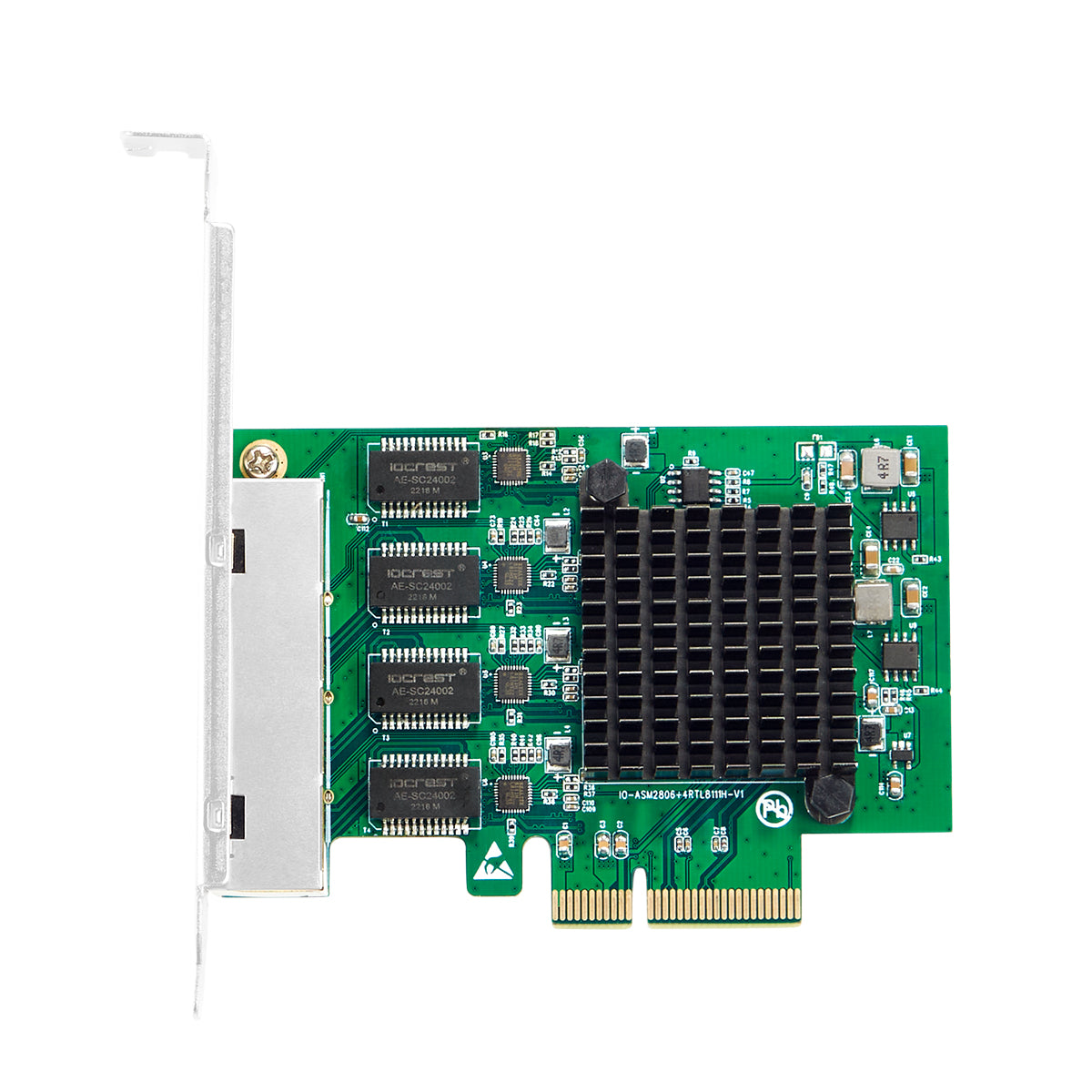
🔧 Product Features
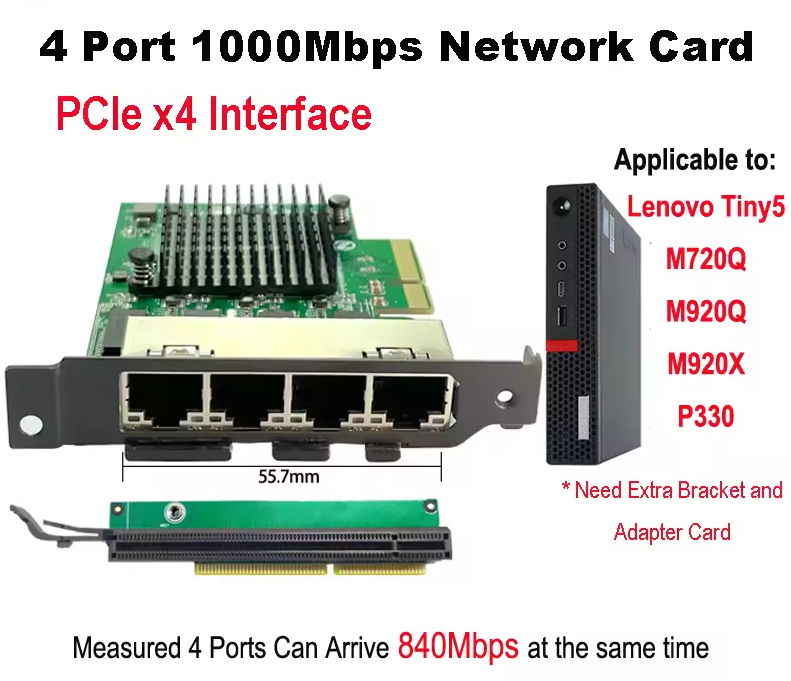
- ✅ 4-Port Gigabit Ethernet Card
- ✅ RTL8111H High-Performance Chip
- ✅ Compatible with PCIe x4/x8/x16 Slots
- ✅ Suitable for Servers & Workstations
📋 Technical Specifications
🎯 Application Scenarios
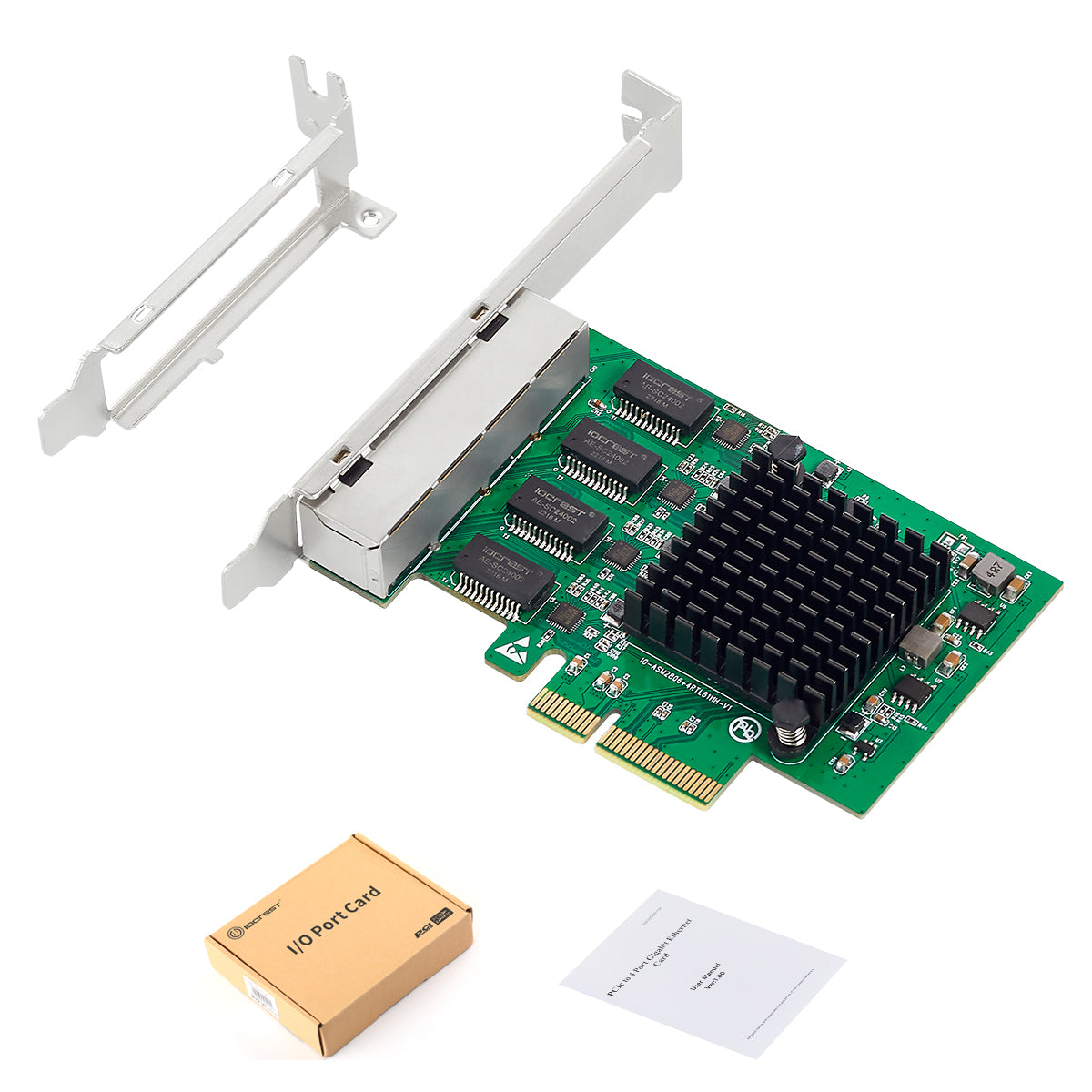
📦 Package Contents
- 1 x PCIe to 4-Port Gigabit Ethernet Card
- 1 x User Manual
- 1 x Low Profile Bracket
💾 Driver Download
❓ Frequently Asked Questions
Q: What chipset does this network card use?
A: This network card uses the Realtek RTL8111H chipset, an industry-proven gigabit ethernet controller with excellent driver support across Windows, Linux, and macOS.
Q: How many ethernet ports does this card have?
A: 4 independent gigabit ethernet ports (RJ45), each capable of 10/100/1000Mbps with auto-negotiation. All four ports can be used simultaneously.
Q: What PCIe slot does this network card require?
A: Uses PCIe x1 interface but compatible with x4, x8, and x16 slots.
Q: Is this network card compatible with Linux?
A: Yes! Works out-of-the-box with Ubuntu, Debian, CentOS, Fedora, pfSense, and OPNsense (kernel 2.6+).
Q: Can I use this card in a small form factor (SFF) computer?
A: Yes! Includes both standard and low-profile brackets.
Q: Does this card support link aggregation (LACP/bonding)?
A: Yes, you can configure multiple ports for link aggregation (LACP) or bonding with compatible switch hardware and proper OS configuration.
Q: Can I use this for a NAS or file server?
A: Yes! Ideal for NAS and file server applications with multiple network segments.
Q: Do I need to install drivers?
A: Yes, please download the RTL8111H driver from the link above. Includes drivers for Windows, Linux, and macOS.
Q: Can I use this card for a pfSense or OPNsense router?
A: Absolutely! Perfect for building custom routers and firewalls with pfSense, OPNsense, or similar platforms.
Q: What is the power consumption of this card?
A: Draws power from PCIe slot (3.3V/12V), typically under 5W at full load. No additional power connectors required.
Q: Does this card support jumbo frames?
A: Yes, supports jumbo frames up to 9KB for improved performance in large file transfer environments.